PitchBook
2025
Redesigning access management to save $4M operational costs and unlock enterprise growth

My Role
Product Designer
Sole Designer
Team
1x Product Manager
Scope
End-to-end 8-month system redesign
Research through production
Problem Area
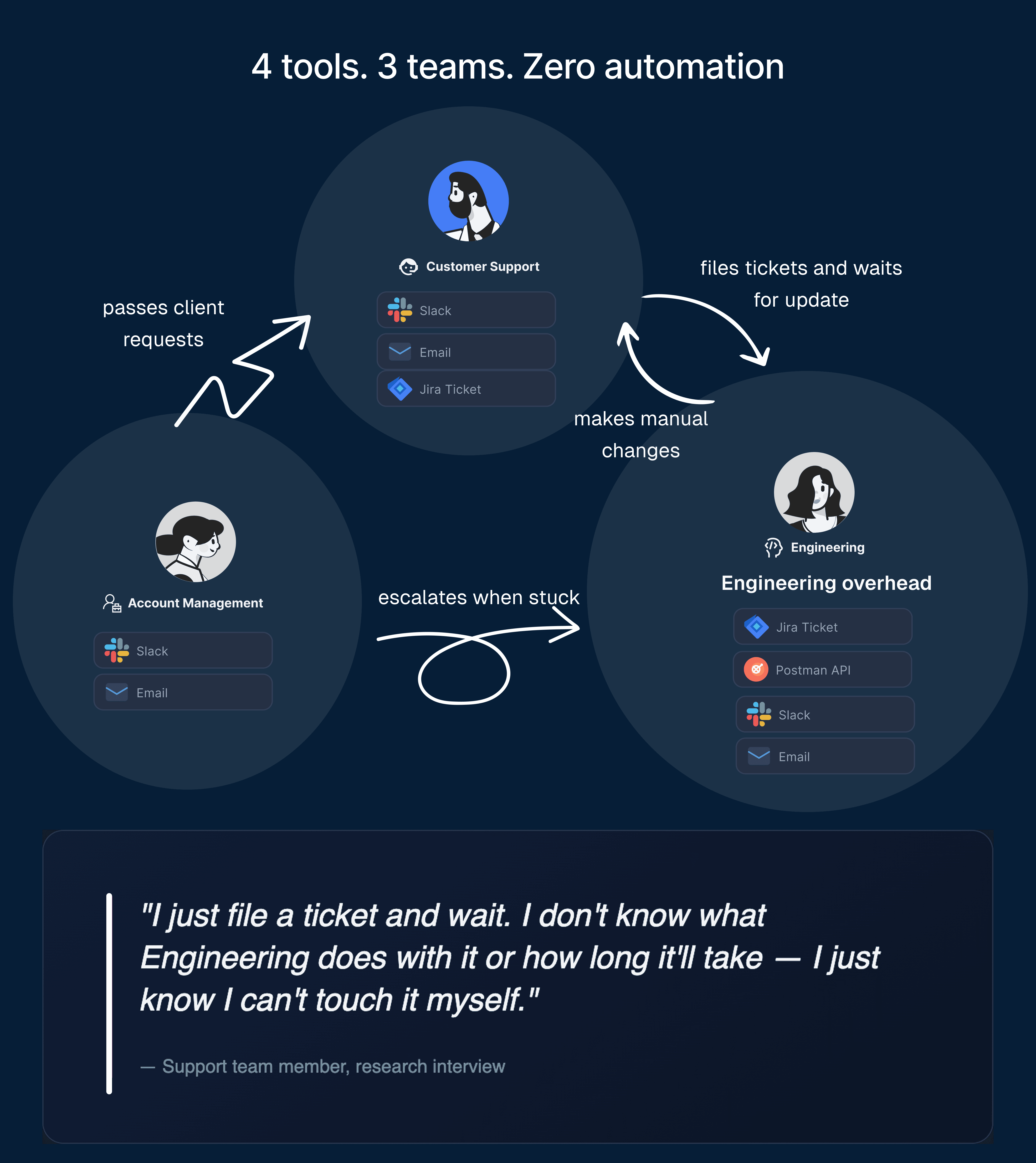
Support reps were handling 200+ access requests per week. Every one required an Engineering ticket. Average turnaround: 5 days. Clients waited and churned.
Research | Root Cause
Most teams saw a workflow problem. I traced it to four deeper layers.

Key INSIGHT
The legacy system had permissions stored as flat boolean flags tied directly to user IDs. Any change required direct database writes by Engineering, with no audit trail and no rollback.
Design goals
The goal wasn't to remove Engineering from the workflow. It was to make Support reps confident enough to never need them. Fast enough to act in minutes. Forgiving enough that mistakes get caught before they land. Structured enough that a new rep on day one can set up a complex enterprise account alone.
Solution Overview
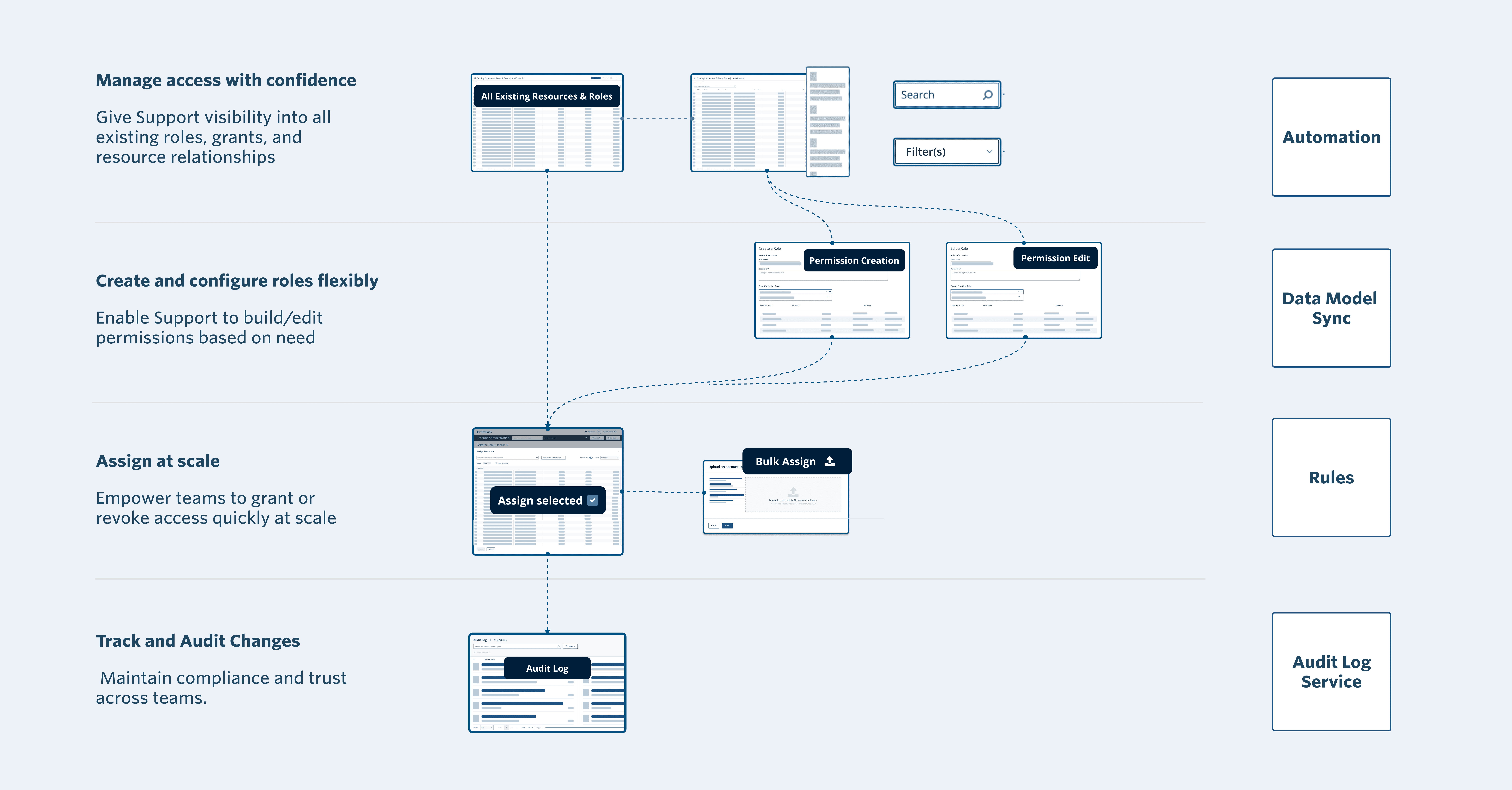
Support can now assign, update, and audit access end-to-end without Engineering

Strategic Decision
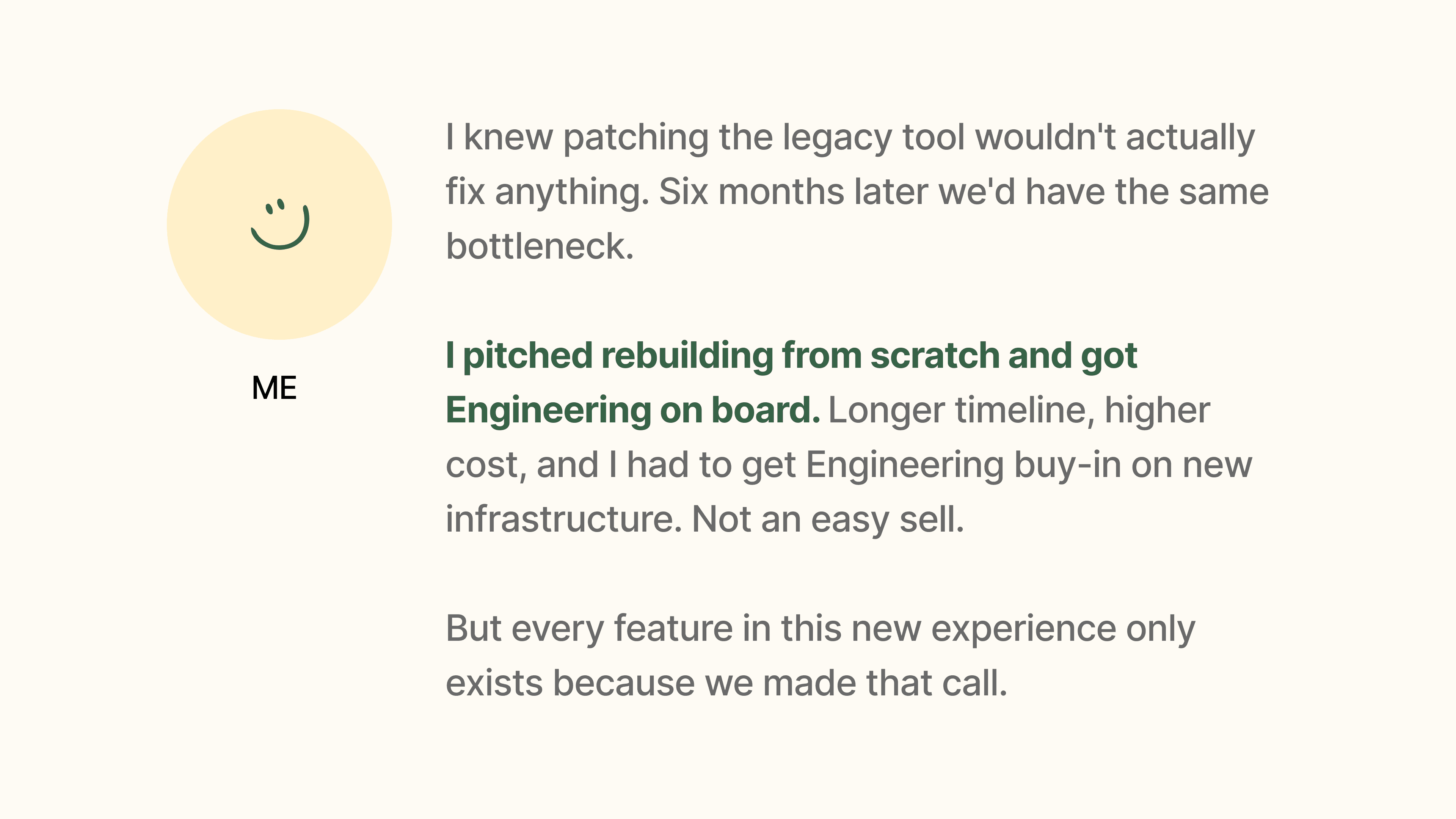
I won stakeholder buy-in on throwing out the legacy system entirely and building a new platform.
Explored
Cleaner UI on legacy system
↓
Flat binary data model unchanged
↓
No permission hierarchy. No self-service possible.
Patch the legacy tool
Pro: low effort to build
Con: still require engineering resource, hard to create self-service, lack flexibility
Selected ✓
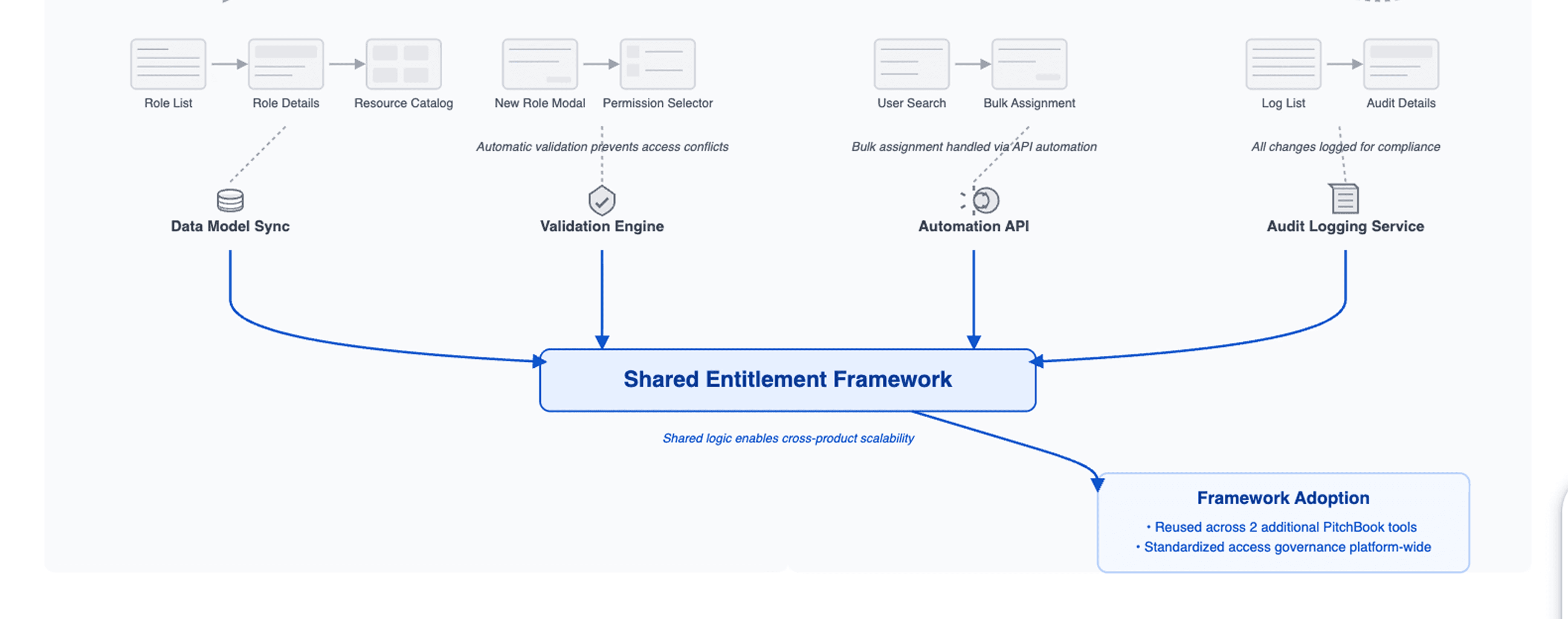
New role-based data model
↓
Support owns full lifecycle
↓
Engineering removed from routine workflow
Build a new platform
Pro: eliminates the root cause, easy to scale with client and business needs
Con: longer timeline, harder sell to Engineering.
Challenge 01
First, HMW make the system structured enough that a new Support rep can set up a complex account on day one?
Explored - Duplicate a similar account
Existing Account 1
12 roles · 48 permissions
↓ clone all settings to ↓
New Client Account
12 roles · 48 permissions
✗ clones copy errors silently
Selected ✓ - Presets + customize
Choose preset
● Preset 1: Standard
○ Preset 2: Basic Access
○ Preset 3: Premium
○ Preset 4: Education accout
✓ scales safely with speed
I noticed 80% of new accounts fell into the same four configurations. Reps were reinventing the wheel every time. That's wheree presets help standardize setup efficiently.
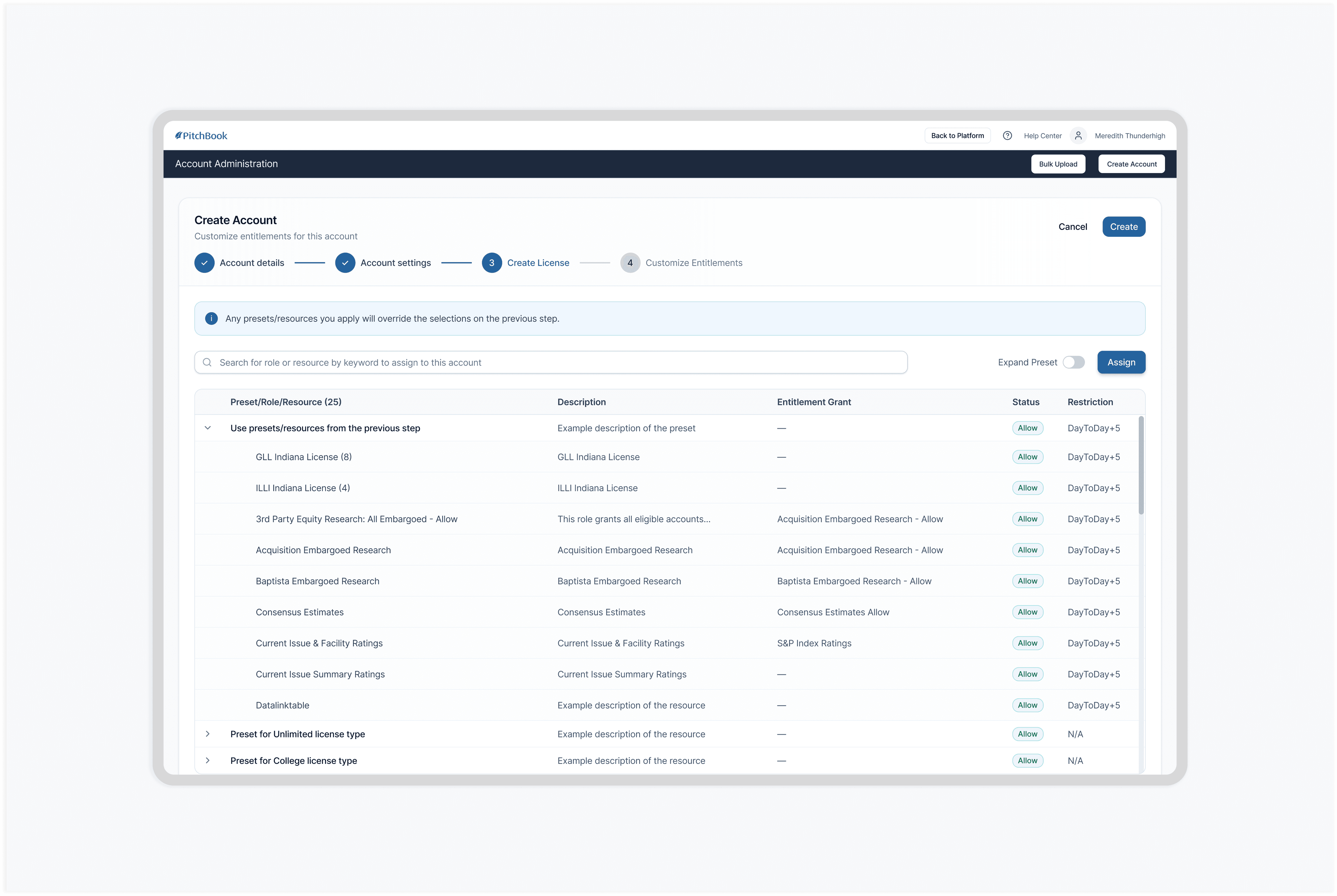
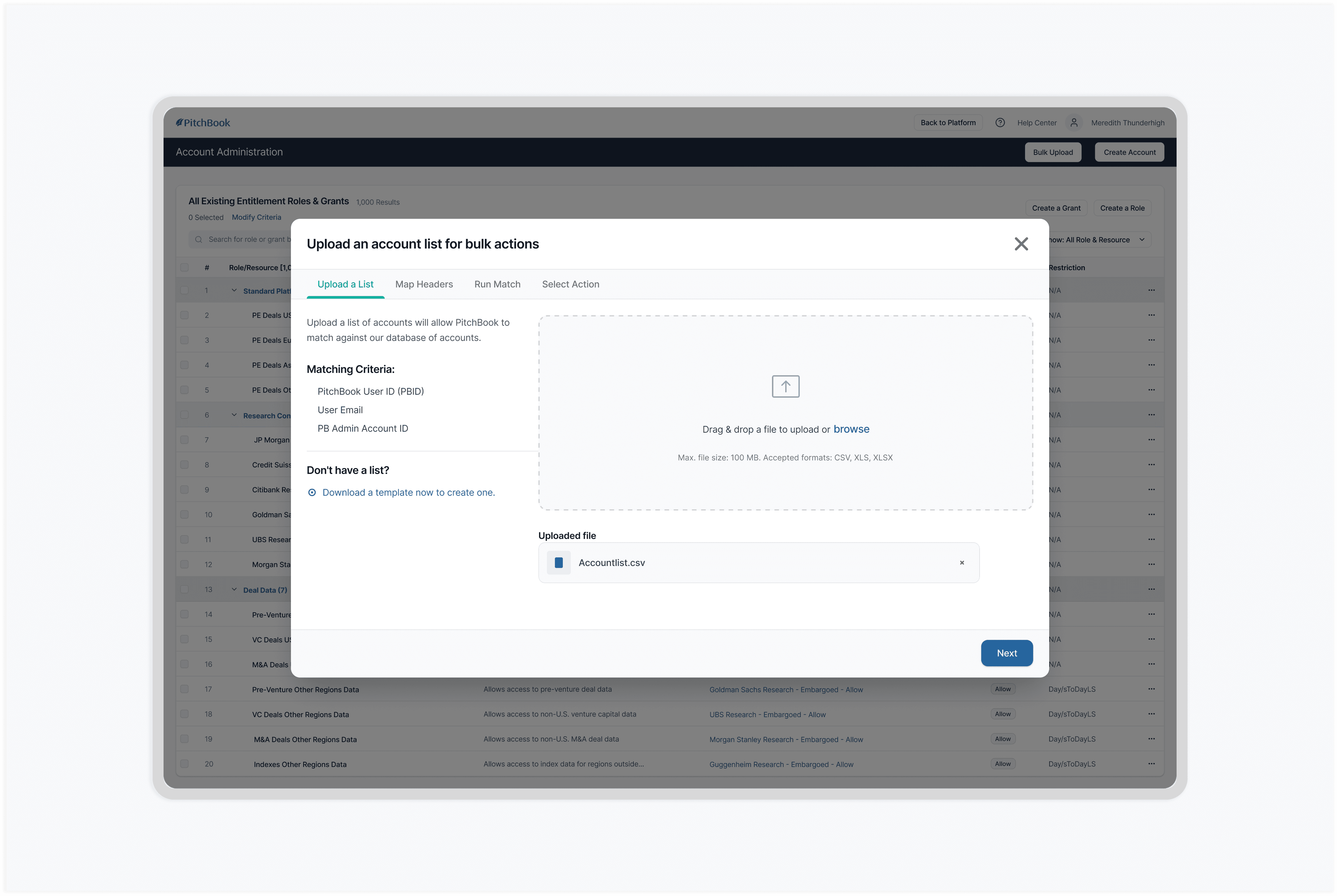
Support handles hundreds of accounts. Bulk action helps distribute access across multiple accounts simultaneously.
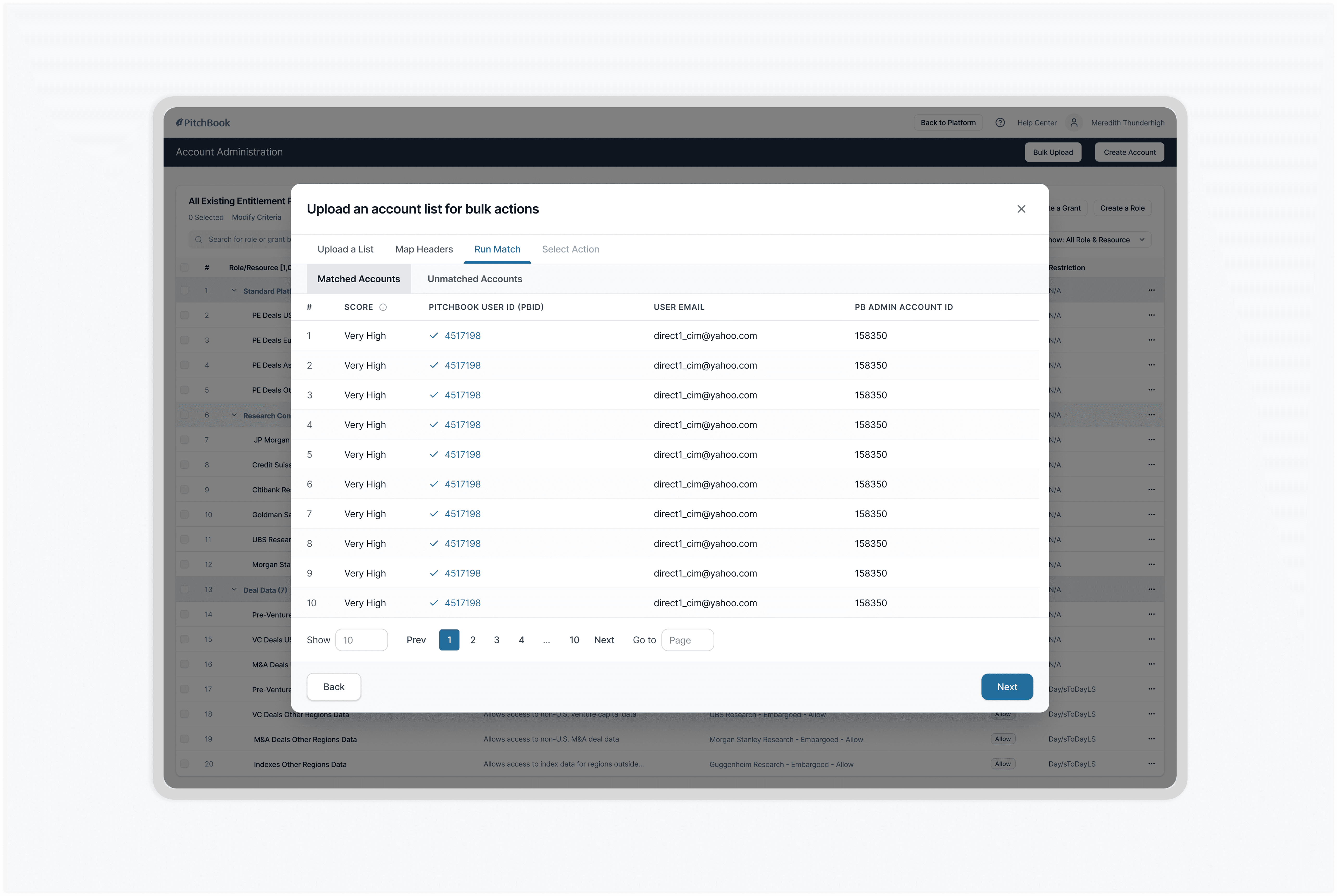
When I reviewed Support incidents, three out of five were the same mistake: right config, wrong account. This confirmation step helps Support validate account accuracy before execution
Challenge 02
HMW give Support the confidence to act without calling Engineering?
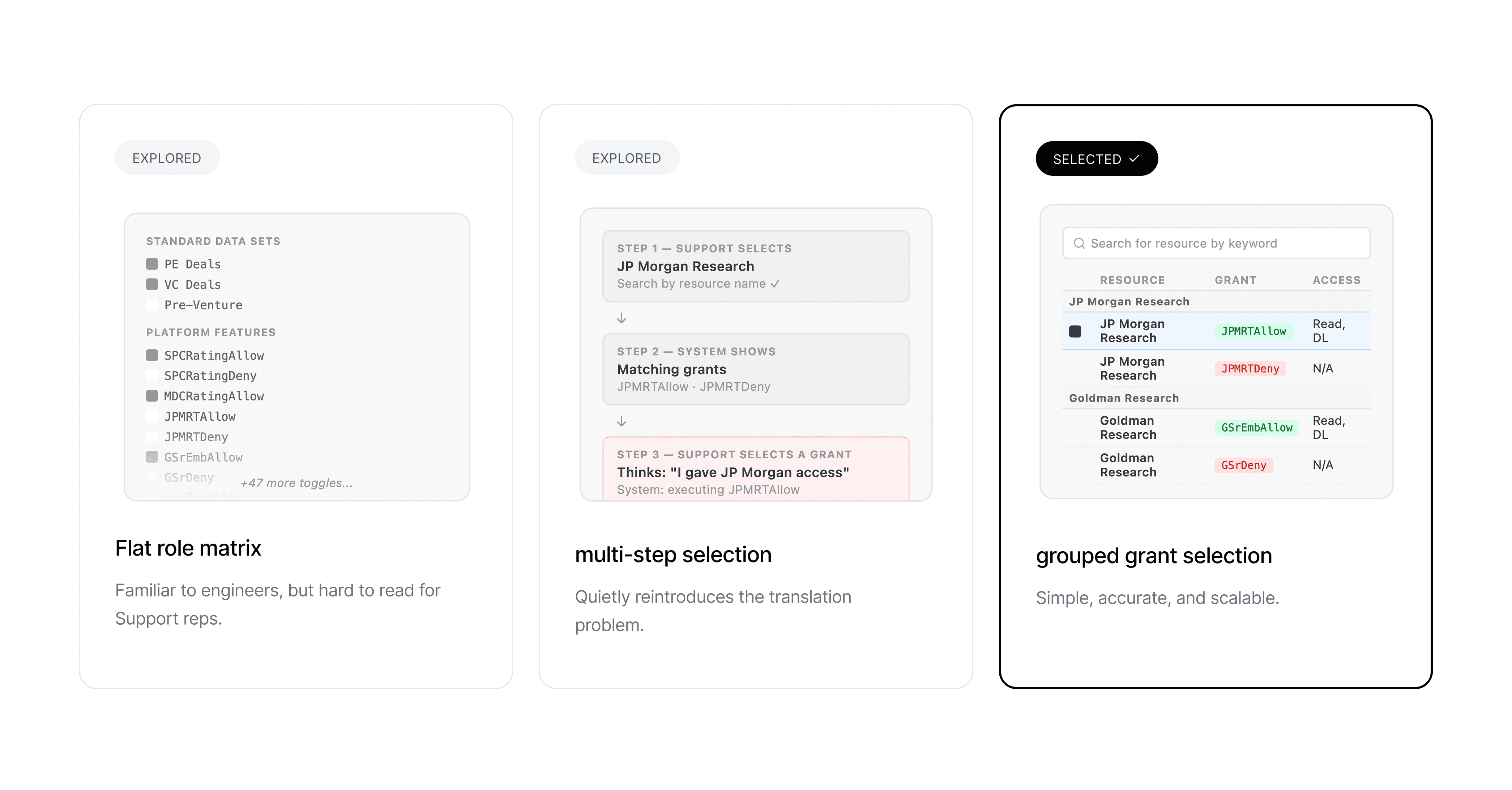
I realized everyone said "access". Nobody meant the same thing. I had to fix the vocabulary first.
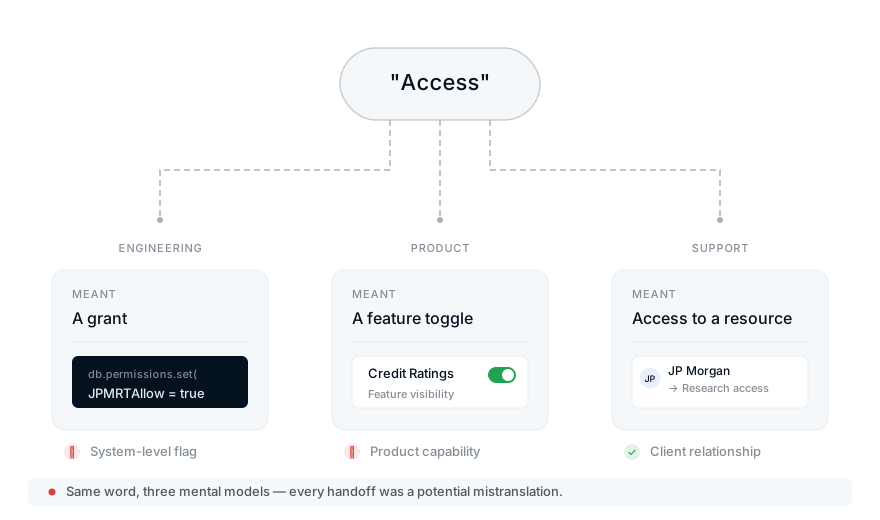
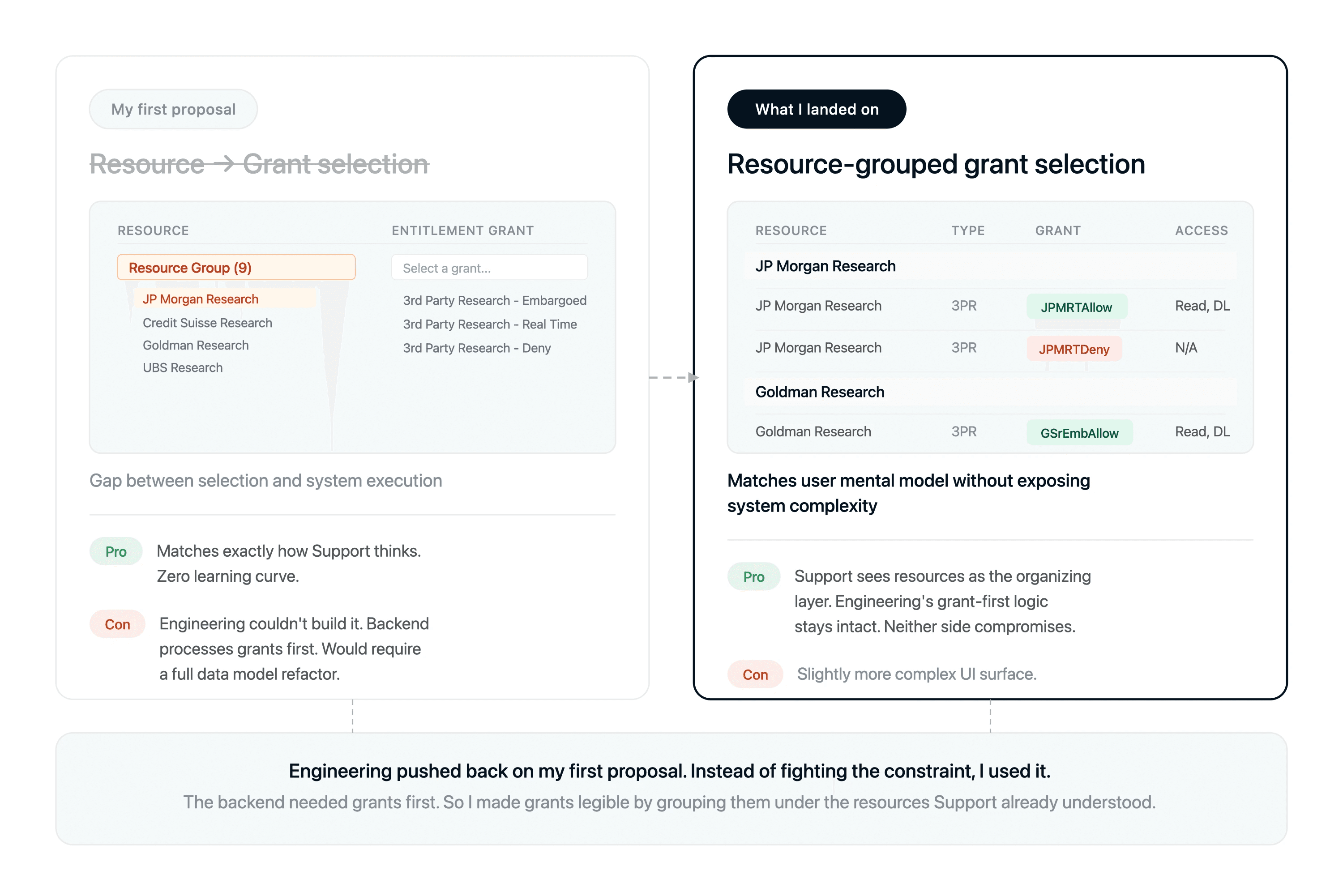
Support's model was the simplest: "this client needs access to this resource." But the backend didn't work that way. I chose the option matching Support's mental model but respected Engineering's data structure.
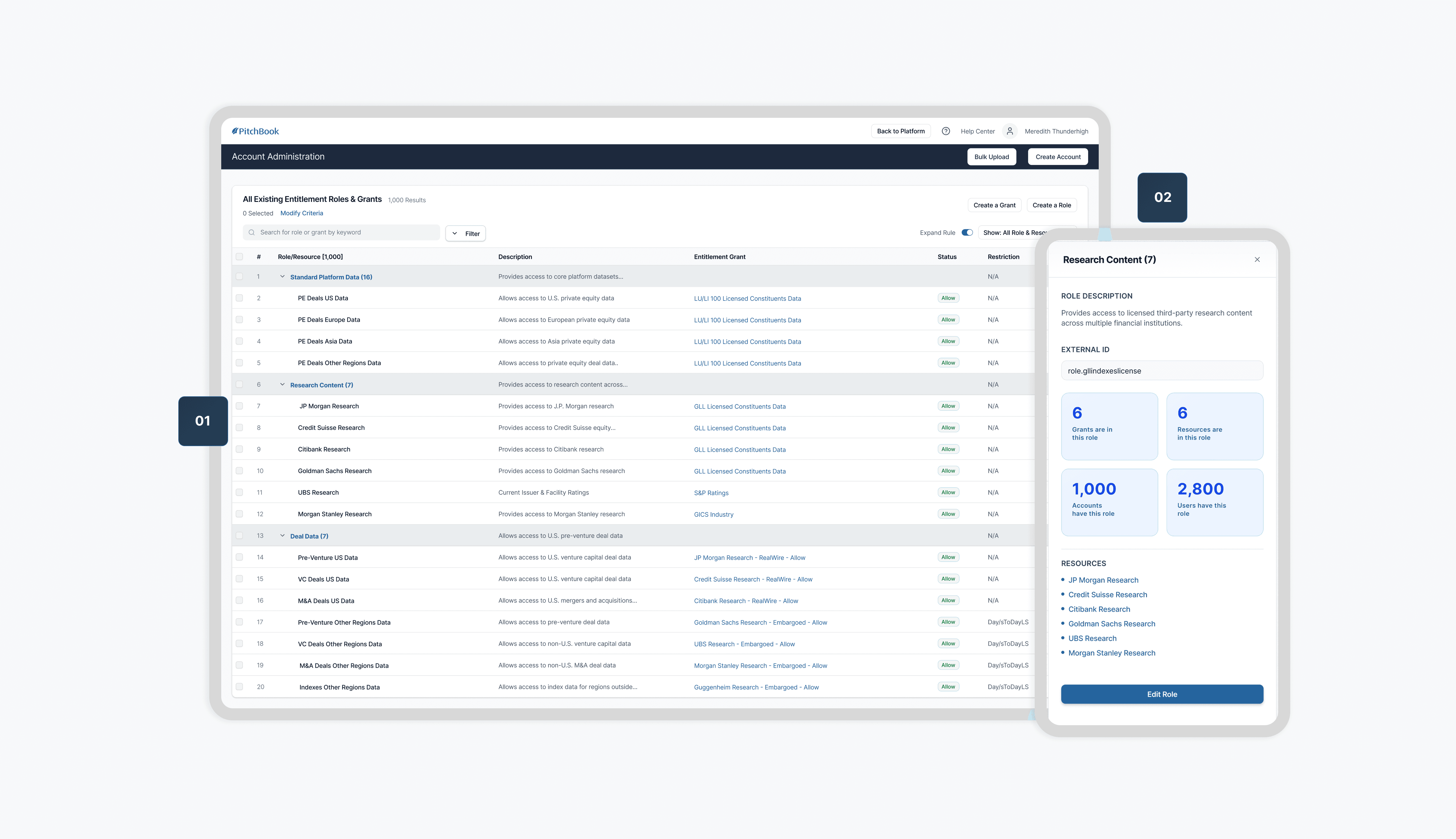
1. Access relationships, visible at a glance — no backend knowledge needed
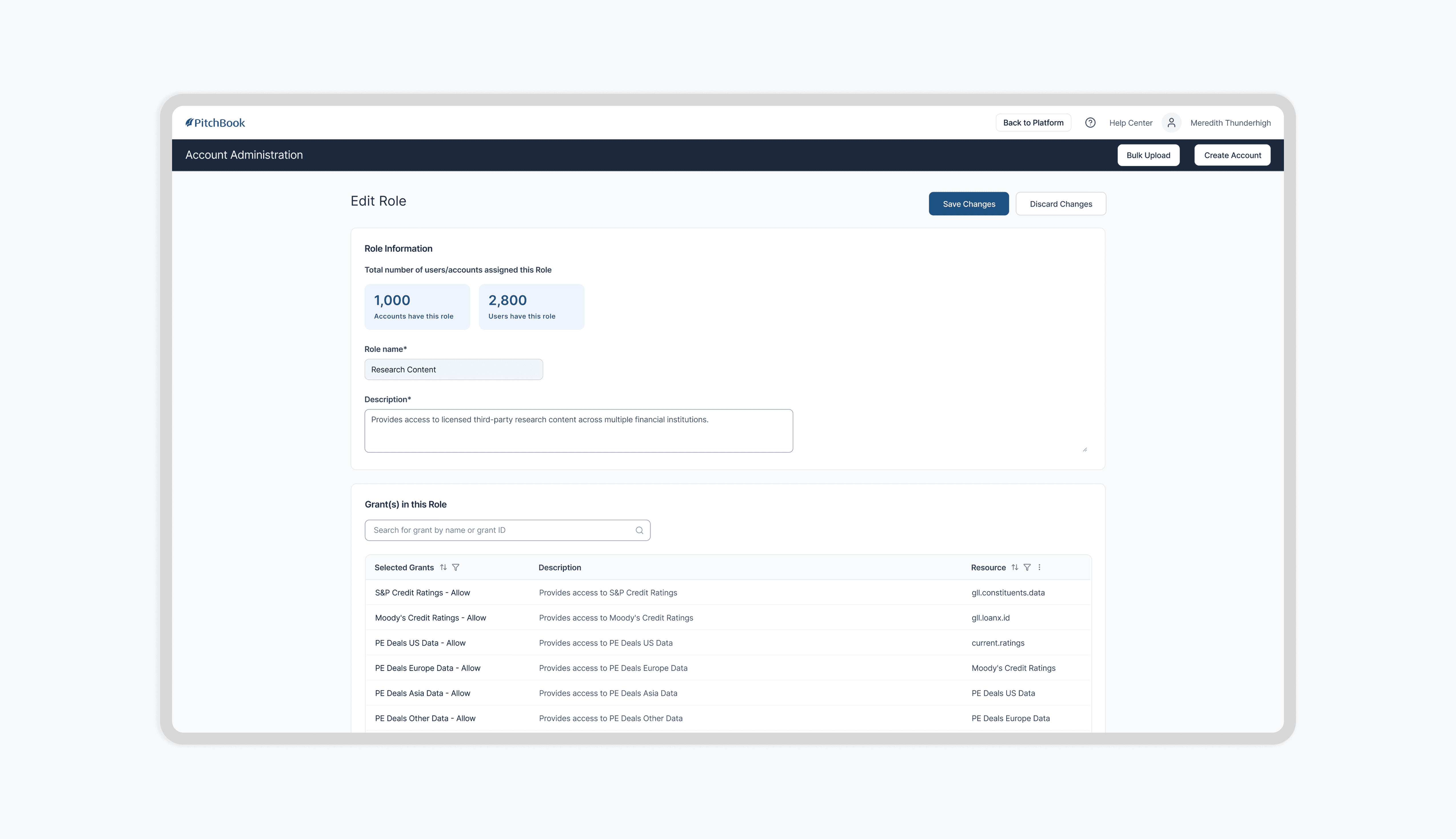
2. See the full impact of a role change before committing to it
Support can finally see and understand the full access landscape.

Challenge 03
Finally, HMW let Support move fast without letting mistakes slip through silently?
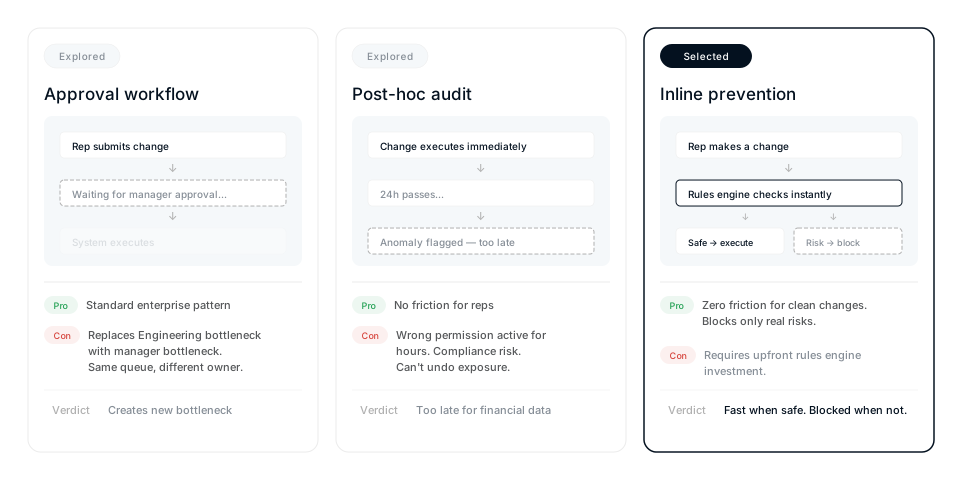
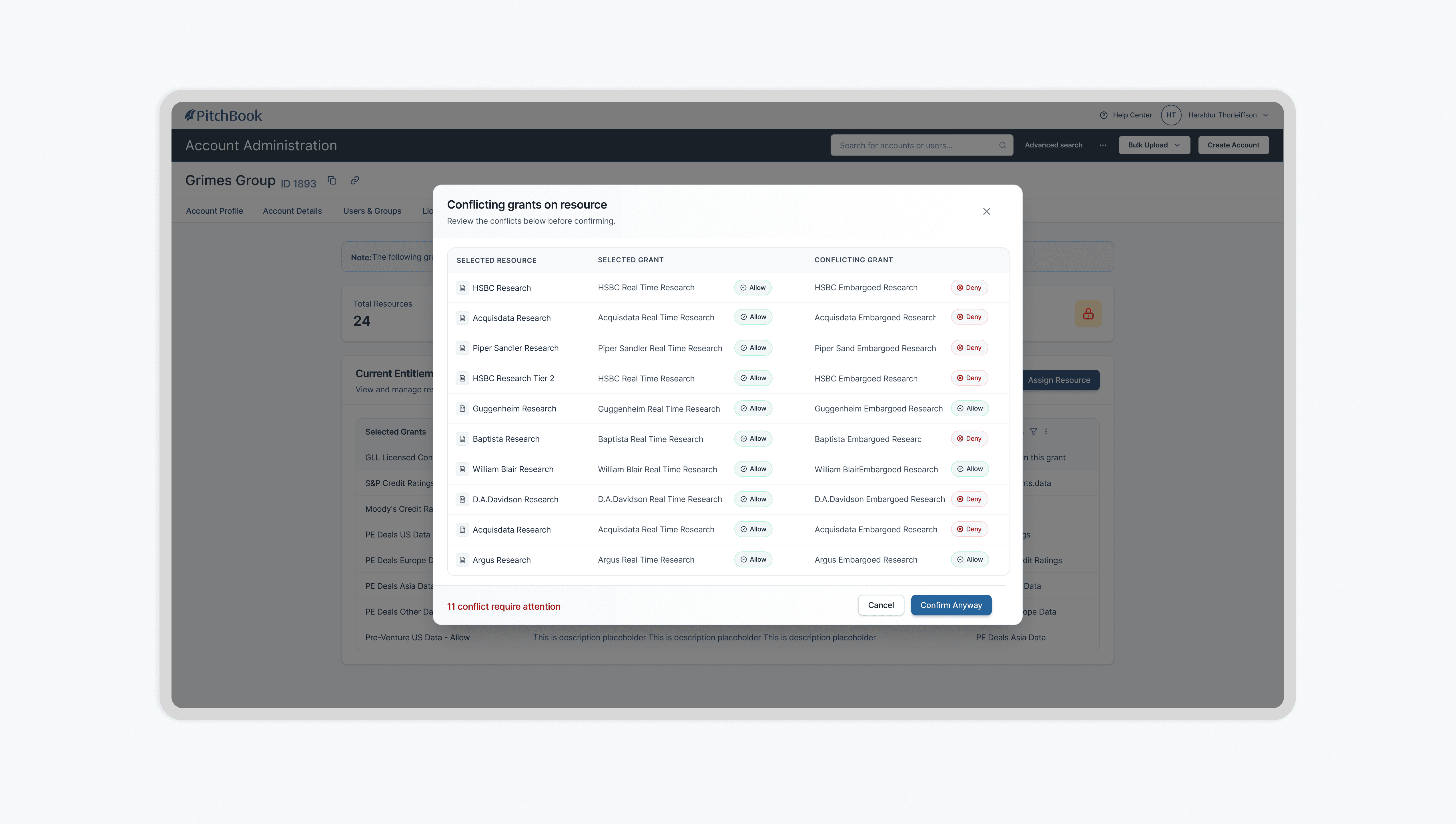
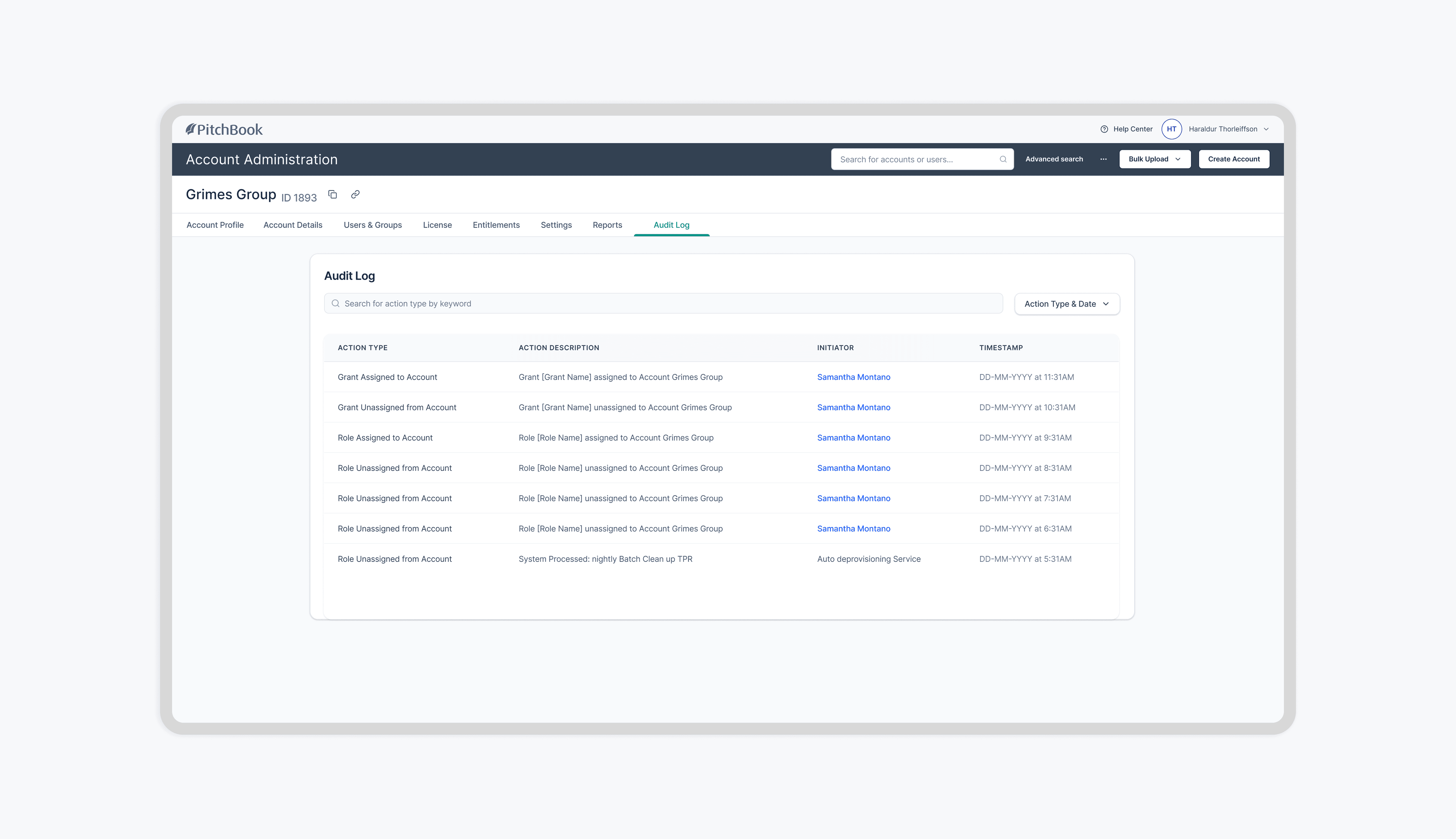
1. Help user catch mistakes before they happen
2. Impact visibility
Outcome
From manual bottleneck to scalable infrastructure
5 min
Access setup time
was 2–5 days
0
Eng tickets for access
was 40+/month
78%
Reduction
in Support Tickets
0
Compliance incidents
6 months post-launch
"Before this redesign, I'd spend half my Monday mornings filing tickets just to set up new client accounts. Now I pick a preset, adjust what I need, and I'm done before my coffee gets cold. I don't even think about the old system anymore."
Sarah M., Senior Support Operations Lead

