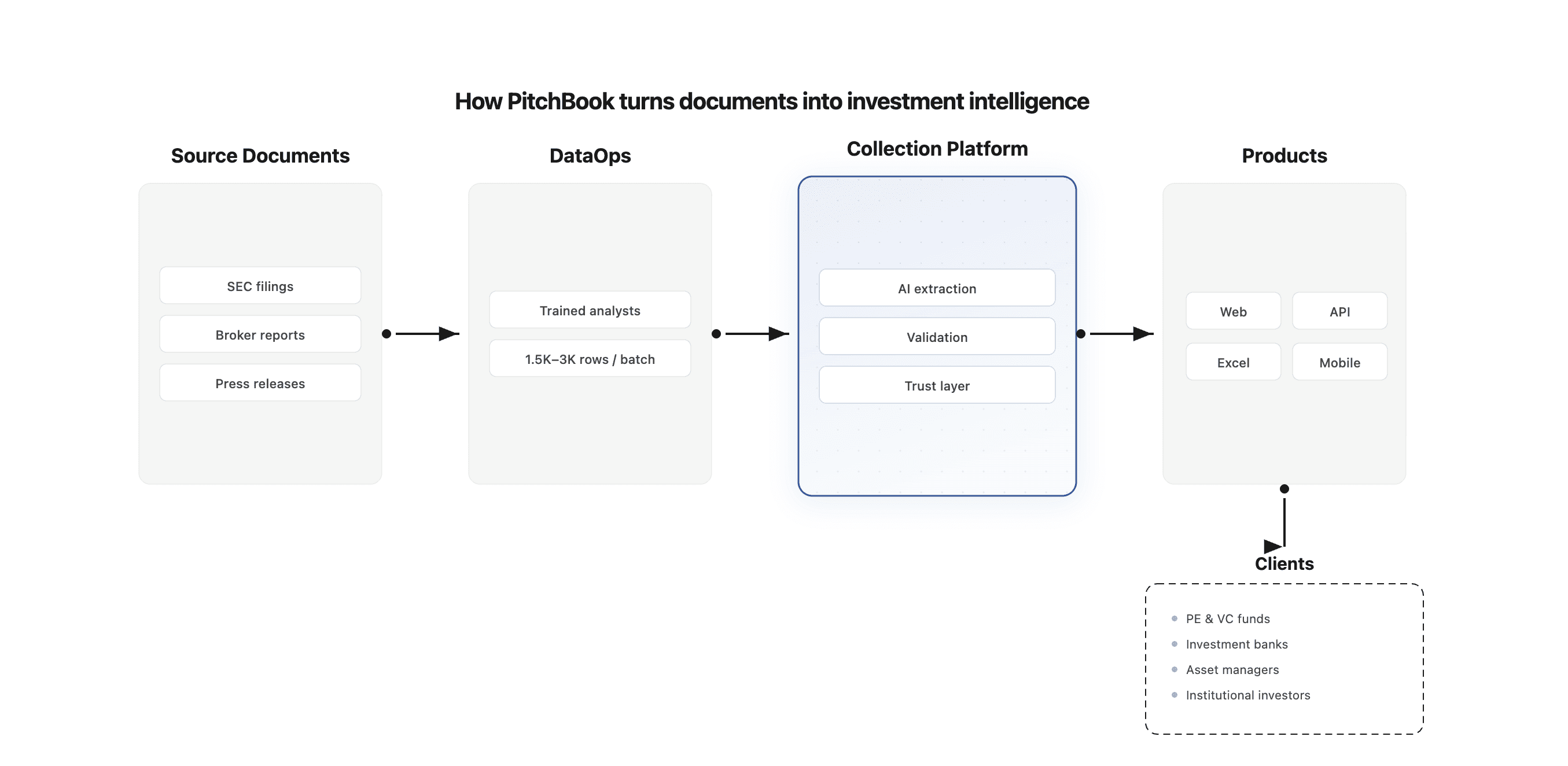
The most struggle point for investors is to find high-quality,c unique data though big amount of data(海底捞针)and make sure the data is accurate sometimes the 针is wrong. (符合第一个complex人设)
But as the datasets grew, hand-collection couldn't keep up. Slow, manual, error-prone. Clients complained about errors and long waits.
GOAL 123 business goals+ design goal: reduce internal workload: users able to efficiently update data
HMW
Phase 1 research - find the root cause
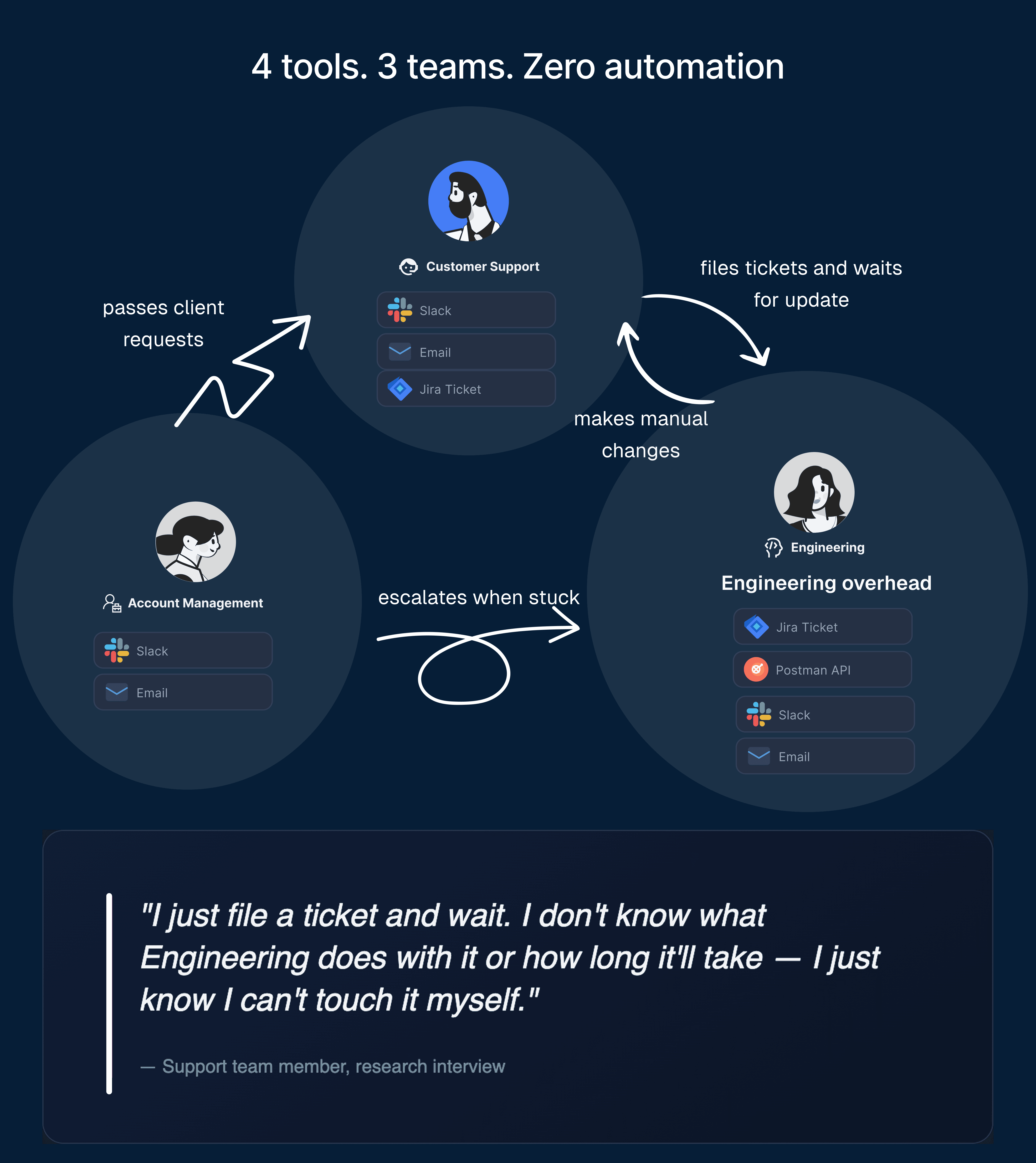
User interview
1. user quote 图
2. user current flow/joruney map简单的图,画map, 展示daily routine上其他网站搜
Current the biggest struggle/root cause is XXX
Summary of pain points 123
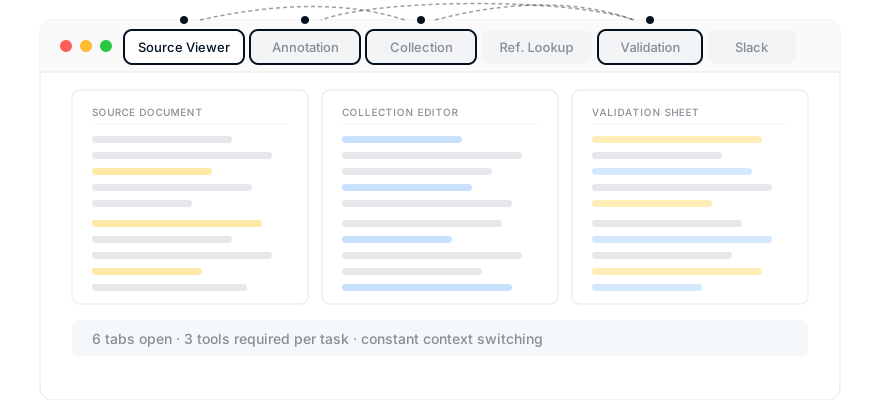
1. user pain point/have to jump across different tools 他们需要去不同平台收集数据)
(最后AI centralized)
Current soltuion audit
从而体现哪些符合user daily需求 哪些是struggling point, 现在的solution 能满足user need, 但是不能满足productivity, (只说现有产品不好) (不用全说) (从problem, research到ideation 都要match)
Dataset Tool
Dataset Tool
Dataset Tool
Dataset Tool
Dataset Tool
Dataset Tool
Dataset Tool
Dataset Tool
Dataset Tool
Dataset Tool
Dataset Tool
Dataset Tool
Dataset Tool
Dataset Tool
Dataset Tool
Dataset Tool
Dataset Tool
Dataset Tool
Dataset Tool
Dataset Tool
Dataset Tool
Dataset Tool
Dataset Tool
Dataset Tool
Dataset Tool
Dataset Tool
Dataset Tool
Dataset Tool
Dataset Tool
Dataset Tool
30+ TOOLSfragmented, no shared standard
UDCPUnified Data Collection Platform
CollectionEditor
QC + ReviewSurfaces
Entity Profiles+ Entitlements
AI Extraction + Confidence Scoring Layer
1 PLATFORMshared standards, AI-native, quality enforced
到ideation 开始引入AI,“我们用ai来解决问题” 开始讲collaboration, 因为ai 不是我能做的 (traditiaonlly, 2 decade problem, ai enginner给了很大support) 结合pm stakeholders讨论, 最终的决定/结论是 AI可以帮我们解决这个问题
HOwever, AI is not the perfect soltuion, user no trsut AI, has concern 最重点最重要的分析(核心)
所以我们要定哪几个metrics 从而保证user可以trust, keep human in the loop
we need a standaraizatin process, we need to trains, 所以为了design goal, 我们决定做好几层, design solution, 对应一条一条metric , so we need to make sure we achieve success metric 12345
每个solution怎么解决,
1. 一个section放一个success metric对应一个UI具体设计图, 文字结束
2. 一个section放一个success metric对应一个UI,
For years, analysts collected data by hand — copying from source files and pasting into an internal tool. A single filing could take days.
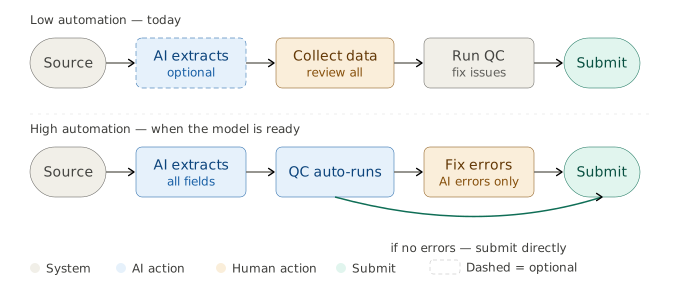
Research surfaced two steps that ate the most time:
Copying and pasting across documents
Validating, comparing, and proofreading the result
We prioritized the second.
It saved the most time for the least effort. Automating the first would mean standardizing decades of inconsistent data formats across the industry — a far heavier lift for a smaller payoff.
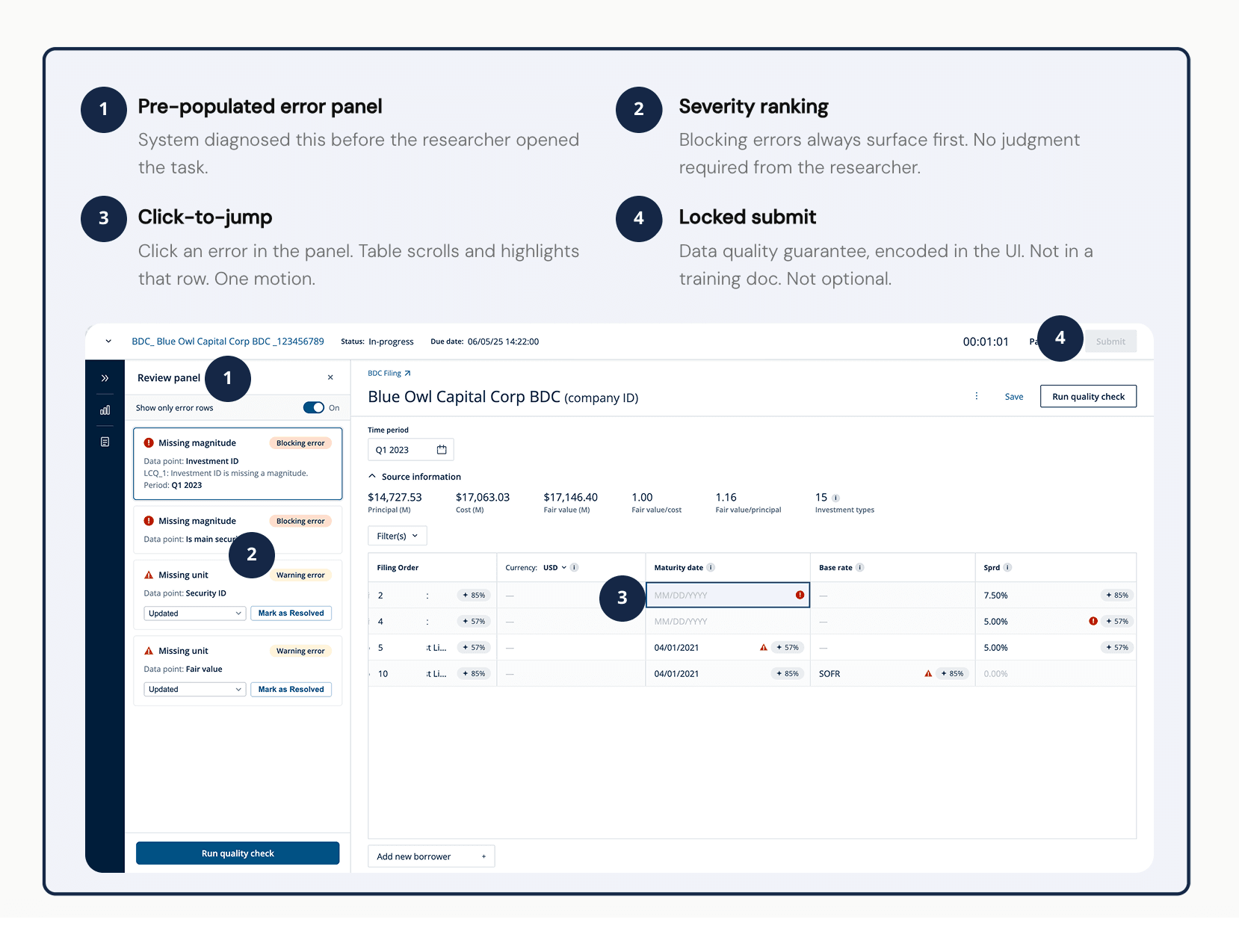
The gaps compounded each other: no real-time validation, no error prevention, no way to track progress, constant context-switching, and no visual anchor to return to.
Design goal: How might we help analysts collect data faster — without sacrificing quality?
We had 30+ scattered collection tools, and adding AI to each one would cost too much. They had to become one tool with a shared schema first. I won leadership buy-in on that direction.
My framing shifted:
"We're not building an AI feature. We're building the foundation that makes AI possible — and the trust layer that lets researchers stop carrying the system's gaps with their own focus, memory, and time."